Polski (PL)
 English (United Kingdom)



Szkolna codzienność w Anglii oczami uczniów i nauczycieli ze Świdnika podczas wizyty w Stanborough School, UK

Author/Editor Maria Anna Furman
In Welwyn Garden City, north of London, 150 pupils are learning Polish at a school that has just 29 Saturdays a year to teach them. For many, Polish is the language they have spoken with their parents and grandparents since early childhood. At the Jeremi Przybora Polish Saturday School, it is also the language in which they explore Poland’s history and geography, read books and make friends. After years of learning together, those friendships are what the oldest pupils talk about when asked what they will remember about the school.
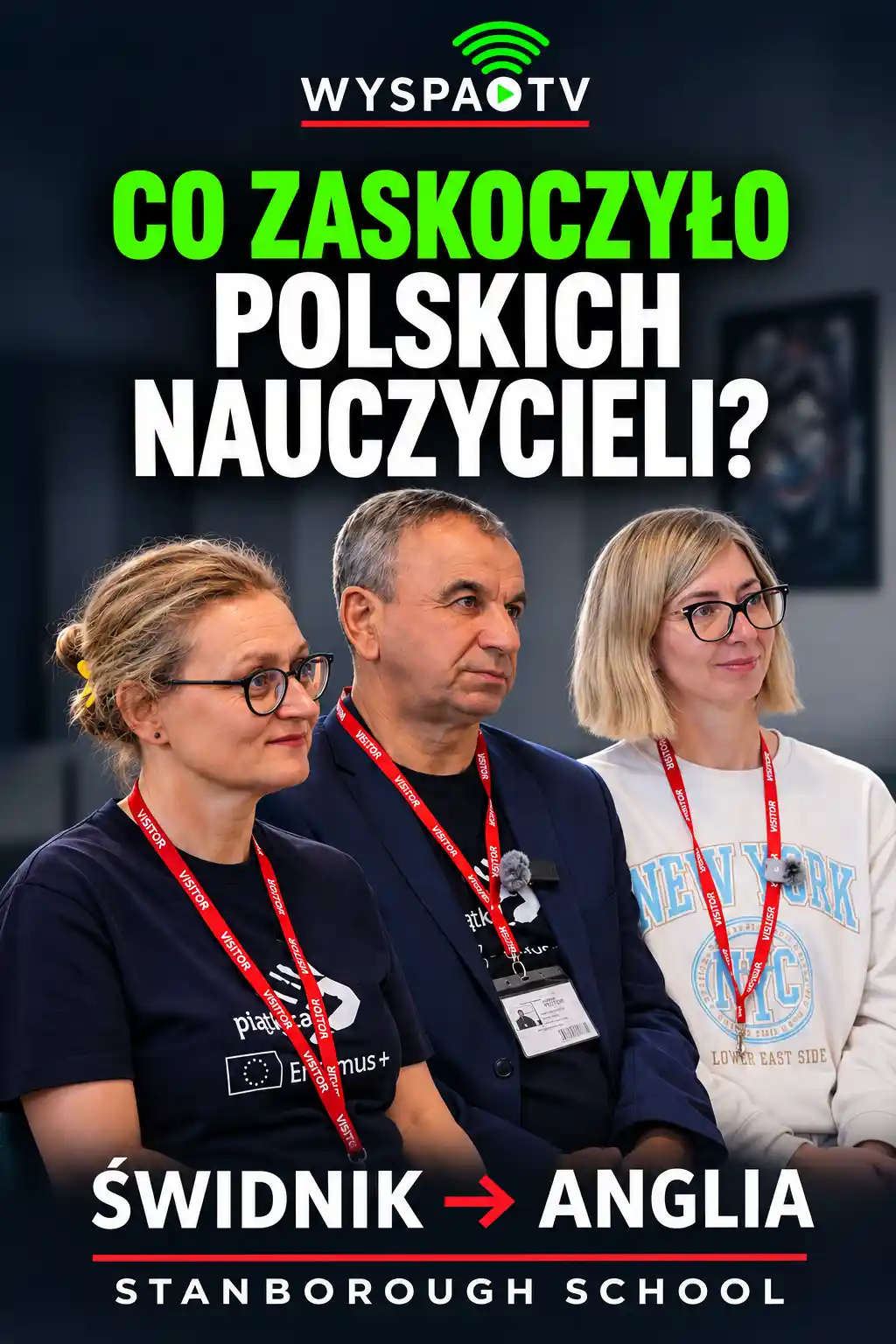
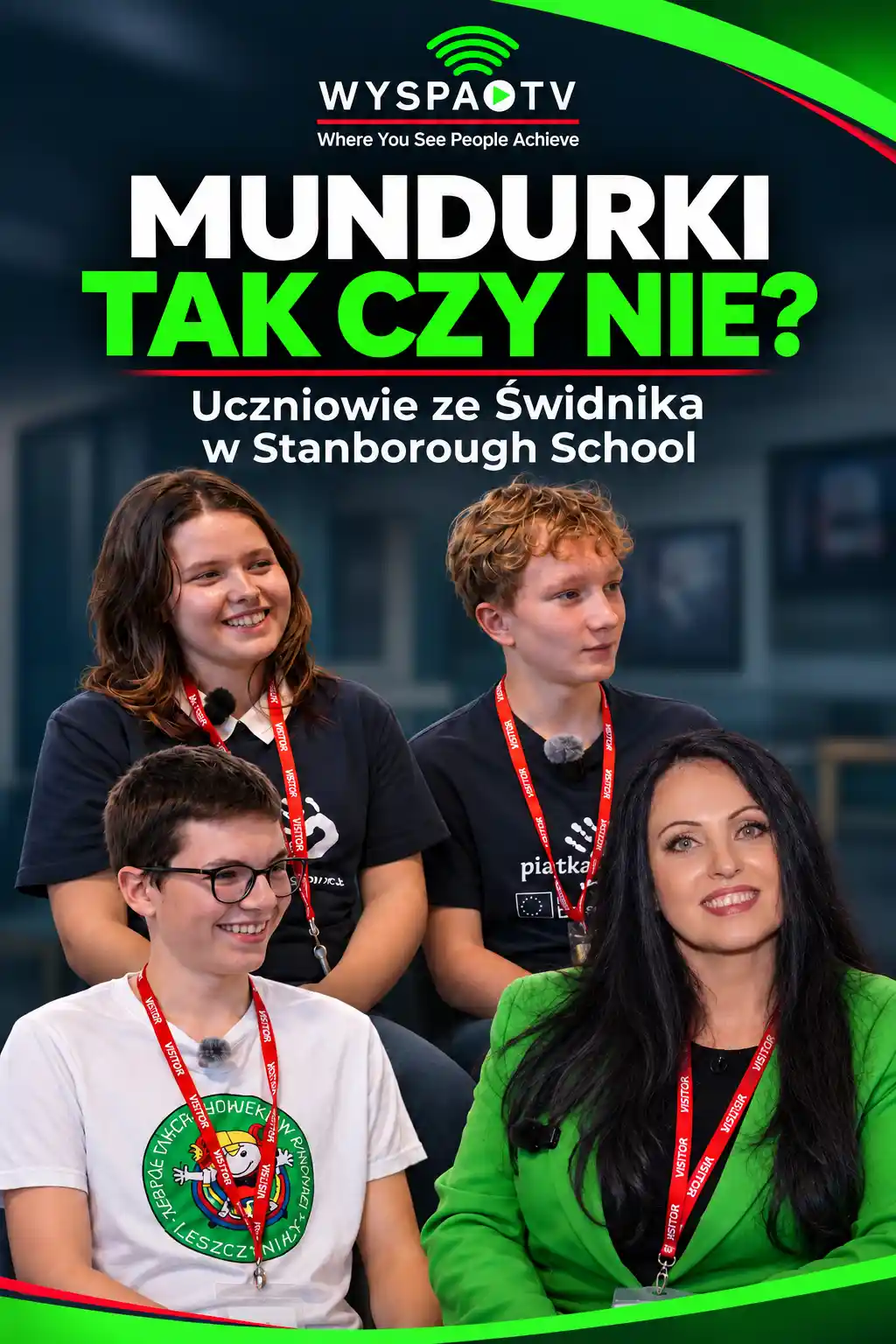
Now approaching its fifteenth anniversary, the school holds classes in a room rented from a local English school. This year, eighteen pupils are preparing for their Polish GCSE. Three of them spoke to Maria Anna Furman of Wyspa TV about what it is like to spend Saturday learning in Polish after a full week at an English school. Joining them were the school’s founder and headteacher, Iwona Pniewska, and one of its teachers, Sylwia Jurczak. For years, both have given up their Saturdays to teach successive groups of young people from Britain’s Polish community.

One pupil describes spending her holidays in Poland, where she sometimes meets others her age who, like her, are visiting from England. They find it easy to talk because they know what it is like to grow up in a Polish family in Britain. Saturday school offers the chance to form that kind of friendship closer to home, with someone as familiar with English school uniforms as they are with Polish customs.
The school is now inviting parents to share their interests with the pupils. The older pupils have already met university representatives and people from a range of professions to hear how they might use their Polish at university and later in their careers.
Asked about the greatest challenges of running the school, the headteacher points to paperwork and funding. The school operates on a charitable basis, and its teachers volunteer their time. Furman asks about the role of the Polish Senate and the Wspólnota Polska association, and whether the support available meets the needs of schools like this one. For the teachers, the question of pay is practical. Lessons have to be planned after work, and on Saturday there is still the journey to school.
Sylwia Jurczak joined the school ten years ago and continues to teach there despite having moved to the Cambridge area. The headteacher puts her journey at around an hour and a half. Asked what makes her proud, she says that every one of her pupils achieves a grade 9 in GCSE Polish. She is quick to give the pupils and their parents credit for those results. When asked which moment she treasures most, though, she recalls the handwritten cards she receives at the end of the school year. One boy trails off laughing when asked on camera about doing his homework. In his card, the words come easily. “Thank you, Miss. You’re brilliant.”
Whole families take part in school life. There are Nativity plays, a ceremony to welcome first-year pupils and a Family Day. The most important celebrations open with a polonaise. Pupils help shape the activities, contribute their own ideas, and join in the preparations. A choir has grown out of the local Polish Mass, and last year the community held a Polish Heritage Day. The headteacher also recalls a gathering of a different kind. A local council representative came to speak to families who needed support with domestic abuse. For some in the local Polish community, the school had become a place they could turn to for help with a difficult personal matter.
At the time of the interview, the school had 150 pupils, with more children waiting for a place. Demand is greatest in the youngest classes. Some families travel in from outside Welwyn Garden City.
As the school approaches its fifteenth anniversary, the headteacher hopes most for continuity. Several years ago, she invited former pupils to help in the younger classes. She intended to try it for a year to see whether the idea would catch on. By the time of filming, former pupils had been returning as classroom assistants for around five years. The youngest children now have someone beside them who remembers those early Saturday starts and knows what it feels like to search for a word in Polish while the teacher waits for an answer. For those former pupils, their final exam turned out to be the first of many more reasons to come back on a Saturday.
Author/Editor Maria Anna Furman
We invite you to subscribe if you appreciate our work and want to support us. By clicking the "Subscribe" button and contributing just £2 a month, you help us grow the Wyspa TV channel and gain access to exclusive premium content. Your support means a lot—thank you!
Meet the owners:
Maria Anna Furman, CEO of Golden Rule Ltd | Founder & Co-Creator of Wyspa TV | Creator of: Stars Night Awards | Leaders of Tomorrow | WINS Magazine
Przemysław Majdak, Co-Founder and Director of Content Production at Wyspa TV | Web Developer
Subscribe now – remove ads and explore premium content


Key Facts
Jeremi Przybora Polish Saturday School is based in Welwyn Garden City, north of London. At the time of the interview with Maria Anna Furman of Wyspa TV, it had 150 pupils, 29 Saturdays available each year and was approaching its fifteenth anniversary. Eighteen pupils were preparing for Polish GCSE. Pupils, founder and headteacher Iwona Pniewska and teacher Sylwia Jurczak discuss learning, friendships and volunteering. The report shows how the school connects successive groups of young people from Polish families, with former pupils returning to help younger children.
What can a Polish Saturday school offer young people growing up in the UK?
A Polish Saturday school gives pupils opportunities to use Polish beyond the family home: in lessons, conversations with friends and shared celebrations. At Jeremi Przybora Polish Saturday School in Welwyn Garden City, pupils also study Polish history and geography and read books in Polish. The language they use with parents and grandparents becomes a language of learning and school friendships.
Relationships feature strongly in the older pupils’ accounts. They meet others who understand both everyday life at an English school and the customs of a Polish home. These shared experiences help explain why friendships come to mind when the young people discuss what they will remember. Their comments reflect the experiences of Wyspa TV’s interviewees, rather than a survey of Polish schools across the UK.
Preparing for Polish GCSE is another important part of school life. Eighteen pupils were preparing for the examination at the time of the interview. Sylwia Jurczak speaks about her pupils achieving grade 9, while recognising the contribution of pupils and parents to those results. Her account describes her teaching experience; it is not a promise of results for future pupils.
Former pupils returning as classroom assistants offer another example of continuity. According to the headteacher, they had been helping younger classes for around five years by the time of the recording. Within this community, finishing school does not necessarily mean losing that connection. Alongside examination preparation, there are friendships, shared traditions and opportunities to pass experience on to younger pupils.
FAQ - frequently asked questions
Where is Jeremi Przybora Polish Saturday School based?
The school is based in Welwyn Garden City, north of London. It uses a room rented from a local English school.
How many pupils attend the Polish school in Welwyn Garden City?
At the time of the interview, the school had 150 pupils, with more children waiting for a place. Demand was strongest in the youngest classes, and some families travelled from outside Welwyn Garden City.
How many Saturdays does the school have available each year?
According to the report, the school has 29 Saturdays available each year. The article does not give the dates of individual lessons.
What do children learn at Jeremi Przybora Polish Saturday School?
Pupils learn Polish, study Polish history and geography in the language, and read books. They also take part in school celebrations and shared activities.
Does the school prepare pupils for Polish GCSE?
Yes. Eighteen pupils were preparing for Polish GCSE at the time of the interview. Three of them spoke to Wyspa TV about learning Polish after a full week at an English school.
Who speaks about the school in the Wyspa TV report?
Maria Anna Furman interviews pupils, the school’s founder and headteacher Iwona Pniewska, and teacher Sylwia Jurczak.
What will pupils remember most about Saturday school?
The older pupils speak about friendships when asked what they will remember. The school brings them together with others who are also growing up in Polish families in the UK.
What challenges does the Polish Saturday school face?
The headteacher highlights administration and funding. According to the report, the school operates on a charitable basis, and teachers volunteer their time for lessons, preparation and travel.
Which events bring the school community together?
The report mentions nativity plays, a welcome ceremony for first-year pupils, Family Day and a polonaise opening major celebrations. It also recalls a Polish Heritage Day held in the year before the interview.
Do former pupils return after finishing their studies?
Yes. The headteacher invited former pupils to help in younger classes. By the time of the recording, alumni had been returning as assistants for around five years.
- Details