Polski (PL)
 English (United Kingdom)



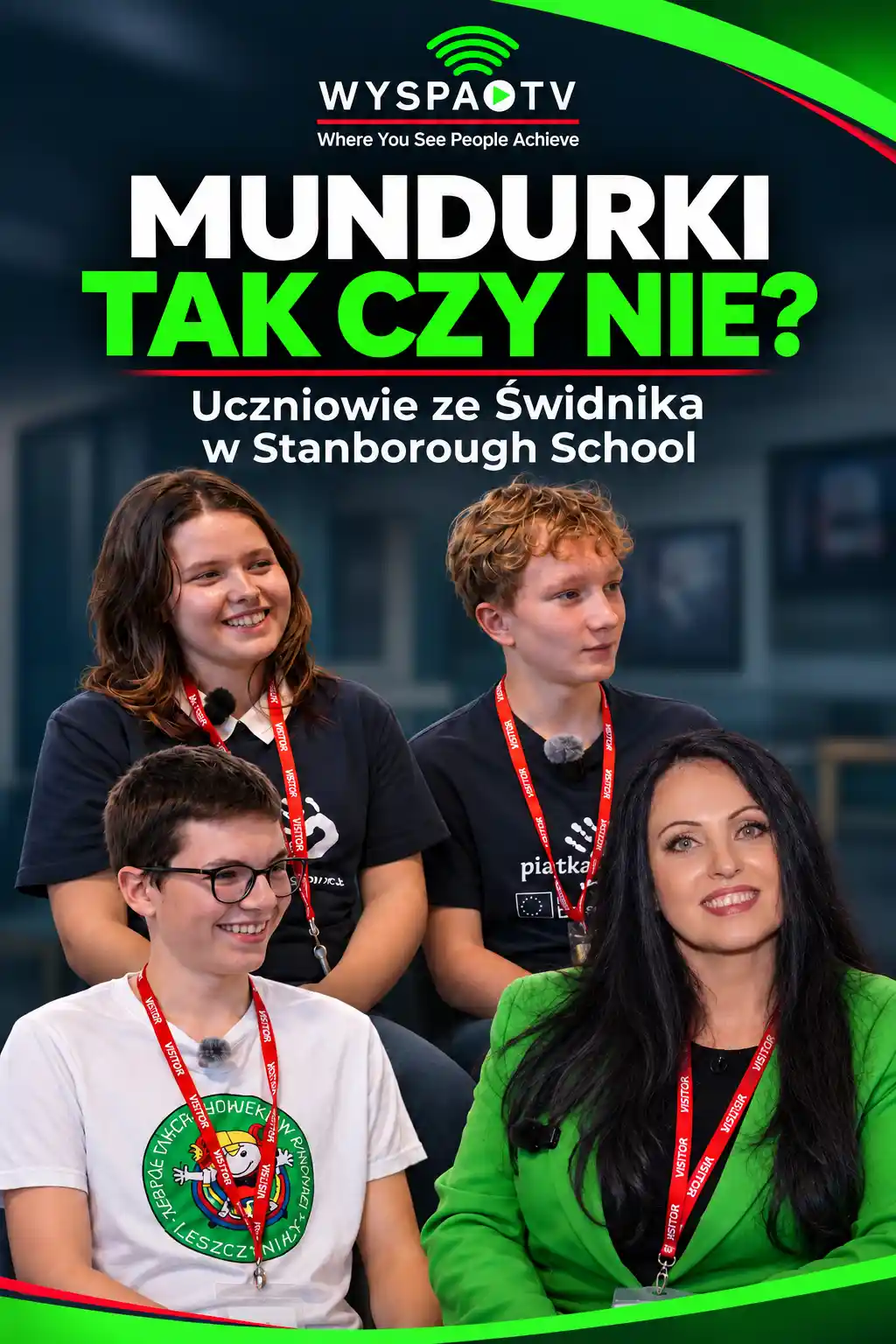
Mundurek widziany z dwóch stron. Uczniowie ze Świdnika o szkole Stanborough School w Welwyn Garden City

Author/Editor Maria Anna Furman
Bartek would happily wear a school uniform. Yet when he asked pupils at Stanborough School in Welwyn Garden City what they thought, everyone he spoke to said they would rather choose what to wear to school. For the boy from Świdnik, the uniform was one of the most striking differences he noticed during his visit to England. For his English peers, it was part of their morning routine. All it took was one question for something as ordinary as getting dressed for school to open up a conversation about freedom, belonging and what young people notice about one another.

During the October visit to Stanborough School, Maria Anna Furman of Wyspa TV asked Iga, Tymoteusz and Bartek what they would remember about meeting the English pupils. Iga immediately thought of the presentation she had prepared for her hosts. She had enjoyed telling them about Poland and, in particular, as she put it, about “where I live and what I experience every day”. For part of the day, she had been getting to know the customs of an unfamiliar school. During her presentation, the roles were reversed. Her hosts could hear about Poland from someone their own age who had chosen for herself which parts of her everyday life to share with them.
Tymoteusz remembered a physics lesson in which the pupils learnt how to calculate the efficiency of a projector. He also took an interest in what happened at breaktime and how the school enforced its rules. He explained that pupils who came to school without their uniform or wore it incorrectly could have it noted on their record. Five such entries meant staying behind after school on a Friday. Tymoteusz could see a place for a similar approach in Poland. From what he had seen, there were times when a little more discipline at school would be welcome. Did pupils themselves want that, then? “Some of them certainly do,” he replied, leaving his classmates room to speak for themselves.
Bartek began by saying how much he liked the smart appearance of a school uniform. Then he mentioned something that can matter considerably more to a teenager. A new pair of trousers or the logo of an expensive brand can be enough to set classmates comparing what they wear. He had heard from friends that pupils were sometimes treated differently because their clothes cost less. He thought a uniform might ease that pressure. The English pupils he spoke to, meanwhile, valued the freedom to express something of themselves through what they put on in the morning.
A smaller detail caught Iga’s eye. She had been given a visitor’s badge, while the pupils were recognisable by the school logo on the front of their uniforms. Even on a short visit, she could tell who was a pupil there. Others could just as easily recognise her as a visitor. She liked the arrangement because it helped keep the school safe. And if it came to a vote on introducing school uniform, she would vote in favour.
The conversation changed pace when the interviewer asked for an example that had nothing to do with clothes. Tymoteusz began explaining why he was interested in grouping pupils according to how well they had grasped a subject. As he searched for a word, Bartek finished the thought for him. “Knowledge.” They had a familiar classroom situation in mind. Some pupils have already understood the topic, while others still need it explained. Bartek would be keen to try learning in sets, particularly in maths and English.
Maria Anna Furman asked the pupils to consider the idea from the perspective of someone placed in the group that needed the most support. How would they feel about being placed there? Might learning together give them the chance to get help from the classmate sitting beside them just when they needed it? For Bartek, much depended on the pace of the lesson. When a teacher moves at the pace of those who grasp the material most quickly, others can fall behind, no matter how hard they try. Iga added that, over time, those pupils might find themselves getting one low mark after another. Then there is the pupil who understood the task the first time. Going over it again takes up time they could have spent trying something more demanding. Bartek wanted teachers to have the time and scope to recognise what both pupils needed.
As the conversation drew to a close, Bartek thanked the headteacher and the mayor for the chance to get to know another culture. Tymoteusz made a point of thanking the teachers too. It was their work, he said, that had made the trip possible. Iga explained that anyone who wanted to go could apply, and that pupils’ attainment in English and maths had been taken into account when places were allocated. The two subjects they had just been discussing as they considered how schools judge what a pupil can do had also played a part in bringing them to Welwyn Garden City.
Author/Editor Maria Anna Furman
We invite you to subscribe if you appreciate our work and want to support us. By clicking the "Subscribe" button and contributing just £2 a month, you help us grow the Wyspa TV channel and gain access to exclusive premium content. Your support means a lot—thank you!
Meet the owners:
Maria Anna Furman, CEO of Golden Rule Ltd | Founder & Co-Creator of Wyspa TV | Creator of: Stars Night Awards | Leaders of Tomorrow | WINS Magazine
Przemysław Majdak, Co-Founder and Director of Content Production at Wyspa TV | Web Developer
Subscribe now – remove ads and explore premium content


Key Facts
Iga, Tymoteusz and Bartek from Świdnik experienced school life at Stanborough School in Welwyn Garden City, England, during an October visit. Speaking to Maria Anna Furman of Wyspa TV, they discussed school uniform, school rules and grouping pupils according to their understanding of a subject. Iga gave a presentation about Poland and her everyday life, while Tymoteusz remembered a physics lesson on calculating a projector's efficiency. Their account shows how differently pupils can view the same arrangements: Bartek would happily wear a uniform, while the Stanborough pupils he spoke to preferred choosing their own clothes.
School uniform and lesson pace: what do equal opportunities mean to pupils?
A school uniform can represent belonging to one pupil and a restriction on freedom to another. The conversation at Stanborough School brings out both perspectives. Bartek valued the smart appearance of a uniform and its potential to reduce comparisons over expensive clothes. The pupils he asked valued choosing their own outfits. These answers describe the experiences of particular interviewees; they are not a survey of the whole school.
Iga noticed another aspect of school clothing: recognising who belonged to the school community. The logo on pupils' uniforms and her visitor's badge helped distinguish pupils from visitors. This was an observation about the arrangements during the visit and her sense of safety. It does not establish that uniform alone can keep a school safe or prevent unequal treatment.
A similar question about different pupils' needs arose when they discussed learning in sets based on their understanding of a subject. Bartek wanted lesson pace to allow time for explanations for pupils who needed support while giving others opportunities to try more demanding tasks. The interviewer raised the feelings of a pupil placed in the group needing the most help, alongside the value of support from classmates.
In this conversation, equal opportunities also involve the everyday conditions for learning: being able to concentrate, receive help and develop one's skills. The visit enabled the pupils to describe these needs through concrete experiences. Their comments offer a starting point for discussion rather than a verdict on which way of organising a school works best.
FAQ - frequently asked questions
Which pupils from Świdnik discussed their visit to Stanborough School?
Iga, Tymoteusz and Bartek, pupils from Świdnik, shared their experiences. Maria Anna Furman of Wyspa TV conducted the interview.
Where and when did the pupils' visit take place?
The pupils visited Stanborough School in Welwyn Garden City, England, in October. The article does not specify the exact day or year of the visit.
Why would Bartek like to wear a school uniform?
Bartek liked the smart appearance of school uniform. He also thought a shared style of dress might reduce comparisons over clothing and pressure to wear expensive brands.
What did the Stanborough pupils Bartek spoke to think of uniform?
According to Bartek, all the pupils he asked would prefer to choose their own clothes for school. This reflects his conversations rather than the views of every pupil at Stanborough School.
What did Iga like about the identification of pupils and visitors?
Iga received a visitor's badge and recognised pupils by the school logo on their uniforms. She liked being able to distinguish pupils from visitors and associated this with safety.
How did Tymoteusz describe the consequences of breaking uniform rules?
According to Tymoteusz, missing or incorrectly worn uniform could lead to an entry on a pupil's record, with five entries meaning staying after school on Friday. The article reports his observation during the visit, rather than the school's current official policy.
What did Iga and Tymoteusz remember about activities during the visit?
Iga enjoyed giving her hosts a presentation about Poland and her everyday life. Tymoteusz remembered a physics lesson in which pupils calculated the efficiency of a projector.
Why would Bartek like to try learning in sets?
Bartek thought sets could help match lesson pace to pupils' needs. He would be keen to try this in maths and English, taking account of both pupils who need further explanations and those ready for more challenging tasks.
What concerns were raised about grouping pupils by their understanding?
Maria Anna Furman asked how a pupil might feel about being placed in the group needing the most support. She also highlighted the opportunity to receive help from a classmate when pupils learn together.
How were pupils selected for the visit from Świdnik?
According to Iga, anyone interested could apply. Pupils' attainment in English and maths was taken into account when places were allocated. The article does not give the full selection criteria.
- Details