Polski (PL)
 English (United Kingdom)



Polish Heritage That Connects Generations. An Independence Day Gathering in Manchester

Author/Editor Maria Anna Furman
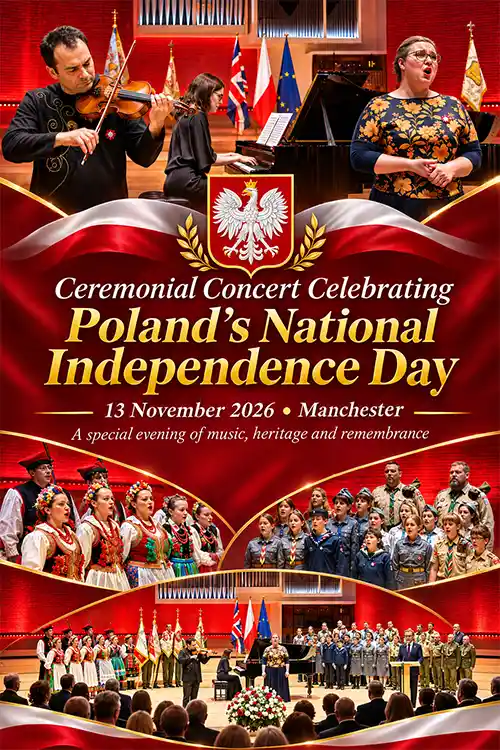
The celebrations of Poland’s National Independence Day in Manchester brought together Poles whose everyday lives are rooted in the United Kingdom, yet who remain connected to their homeland through language, shared memory and family traditions. The event on 13 November combined music with reflection on the meaning of freedom and the role of the Polish community abroad. Topics included the responsibility to safeguard independence, raising future generations, and the need for dialogue despite differences.
The younger generation played an important part in the gathering. Pupils, Girl Guides, Scouts, and children in traditional folk costumes reminded everyone that traditions endure through people willing to learn about them and pass them on. Their participation was made possible by parents, teachers, youth leaders and community volunteers, who often worked around their professional and educational commitments.

Speaking to Maria Anna Furman, Consul General Ireneusz Truszkowski expressed his appreciation for Poles in the United Kingdom who preserve their culture and language and bring up young people with a strong connection to their Polish roots. He highlighted children growing up in a British environment, attending local schools and speaking mainly English. Maintaining a connection to their Polish heritage in these circumstances requires a conscious commitment from adults.
Asked about patriotism abroad, the Consul pointed to practical actions. These included keeping the language alive, celebrating national holidays together and supporting Polish community schools. He placed particular importance on bilingualism, which enriches young people’s development and helps them navigate the world. He also emphasised the role of parents who encourage their children to attend Saturday classes, alongside the volunteers and teachers whose efforts keep these schools running.
The conversation also explored other ways of building connections with Polish culture. Scouting, folk song and dance groups, and sporting activities give young people opportunities to discover traditions through shared experiences. The Consul, who has a scouting background and still identifies with the movement, spoke about its contribution to personal development, cooperation and nurturing patriotism.
Among the Polish community’s activities deserving particular recognition, he highlighted the care of memorial sites and Polish military graves. He mentioned Newark Cemetery and efforts to commemorate Polish airmen, sailors and other service personnel. During the ceremony, medals were presented to individuals who had made distinguished contributions to preserving the memory of Poland’s role in the Allied victory in the Second World War. These honours expressed gratitude for work that keeps history present in the lives of successive generations.
The evening's musical aspect was reflected in the conversation with Łukasz Kasperek, the Consul responsible for Polish community affairs, who helped organise the concert. He was particularly moved by the song about Warsaw that concluded the programme. Learning about its history during the preparations gave the performance added significance and drew attention to the capital’s wartime experience.
The Consul encouraged participants to see the occasion as an opportunity to reflect on contemporary Poland and the place of Polish people in the world. Referring to the Ambassador’s address, he emphasised that freedom must be safeguarded and that possessing it does not guarantee its permanence.
In his message to the Polish community, Łukasz Kasperek placed particular importance on the ability to engage in dialogue. He spoke about being willing to accept criticism, listen to different opinions and try to understand another person’s perspective. In doing so, he identified one of the foundations of community cooperation: maintaining communication even when reaching an understanding requires patience and effort.
The Polish Ambassador offered a broader historical perspective in his address. He reminded those present that the November holiday commemorates the restoration of independence to a country with centuries of history. The joy of freedom should be accompanied by an awareness of the circumstances in which Poland lost its independence and of the responsibility of present generations to strengthen it.
The origins of the Polish national anthem among Poles abroad featured prominently in the address. The Ambassador recalled its connection to the Polish Legions in Italy and the hope of regaining a homeland.
Sharing his impressions of visits to different parts of the United Kingdom, the Ambassador praised the continuity of the Polish community’s commitment. Institutions and initiatives established by earlier waves of Polish migration serve later arrivals, who build on them and contribute ideas of their own. The care of cemeteries, the work of schools and organisations, and the involvement of the youngest generations in community life demonstrate how much can be passed on through personal example.
Throughout the formal addresses and short interviews, a recurring theme was the importance of nurturing the bonds that connect people. The Manchester gathering revealed the many forms these bonds can take: singing the national anthem together, sharing musical experiences, remembering the past and discussing education and cooperation. The Independence Day celebrations gave participants an opportunity to reflect on what connects them to Poland and what they can pass on together to future generations.
Author/Editor Maria Anna Furman
We invite you to subscribe if you appreciate our work and want to support us. By clicking the "Subscribe" button and contributing just £2 a month, you help us grow the Wyspa TV channel and gain access to exclusive premium content. Your support means a lot—thank you!
Meet the owners:
Maria Anna Furman, CEO of Golden Rule Ltd | Founder & Co-Creator of Wyspa TV | Creator of: Stars Night Awards | Leaders of Tomorrow | WINS Magazine
Przemysław Majdak, Co-Founder and Director of Content Production at Wyspa TV | Web Developer
Subscribe now – remove ads and explore premium content


Key Facts
On 13 November 2026, Manchester hosted a ceremonial concert marking Poland's National Independence Day. Members of the Polish community, young people, scouts and those involved in preserving Polish heritage took part in the celebrations. Maria Anna Furman of Wyspa TV interviewed Consul General Ireneusz Truszkowski and Consul for Polish Community Affairs Łukasz Kasperek. The event brought together music, historical remembrance and reflections on passing Polish language and identity to future generations.
Polish Identity Abroad – How Language, Remembrance and Community Connect Generations
For Poles living in the United Kingdom, Polish National Independence Day is more than a commemoration of historical events. It is also an opportunity to reflect on what Polish identity means beyond the country's borders and how cultural heritage can be passed on to future generations.
Polish Saturday schools, scouting organisations, community groups and cultural ensembles play an important role in this process. They provide opportunities for children and young people to discover Polish language, history and traditions through education, music and shared experiences.
During the Independence Day celebrations in Manchester on 13 November 2026, speakers also highlighted the importance of historical remembrance, personal responsibility and mutual respect. Representatives of Polish diplomacy emphasised that patriotism abroad can be expressed not only through national symbols and commemorative ceremonies, but also through the everyday commitment of parents, teachers, scouts and volunteers.
In this context, Polish identity is not simply a legacy of the past. It remains a living connection that each generation can discover, sustain and pass on in its own way.
FAQ - Frequently Asked Questions
When did the Polish Independence Day celebrations take place in Manchester?
The ceremonial concert commemorating Poland's National Independence Day took place in Manchester, United Kingdom, on 13 November 2026.
What was the main purpose of the event?
The event celebrated Polish independence, historical remembrance and the importance of preserving Polish language, culture and traditions across generations living abroad.
Who conducted interviews during the celebrations?
Maria Anna Furman of Wyspa TV interviewed Consul General Ireneusz Truszkowski and Consul for Polish Community Affairs Łukasz Kasperek.
Why are Polish Saturday schools important in the UK?
Polish Saturday schools help children develop their Polish language skills, learn about history and maintain connections with their cultural heritage while growing up in Britain.
Why is bilingualism important for young Polish people abroad?
Bilingualism supports young people's development and helps them participate in British society while maintaining connections with their Polish language, culture and family roots.
How does Polish scouting preserve cultural traditions?
Polish scouting promotes cooperation, responsibility and patriotic values. It allows young people to explore Polish history and culture through shared activities and community involvement.
How were Polish military personnel commemorated?
The ceremony recognised efforts to preserve Polish memorial sites, including the cemetery in Newark. Medals were presented to individuals who helped preserve the memory of Poland's contribution to victory in the Second World War.
What role did music play in the ceremony?
Music provided an opportunity to reflect on Polish history and national identity. A song about Warsaw performed at the end of the concert carried particular historical significance.
What message did Polish diplomats share with the community?
Polish diplomatic representatives highlighted the importance of protecting freedom, preserving historical memory, maintaining the Polish language and encouraging respectful dialogue and cooperation across generations.
- Details