Polski (PL)
 English (United Kingdom)



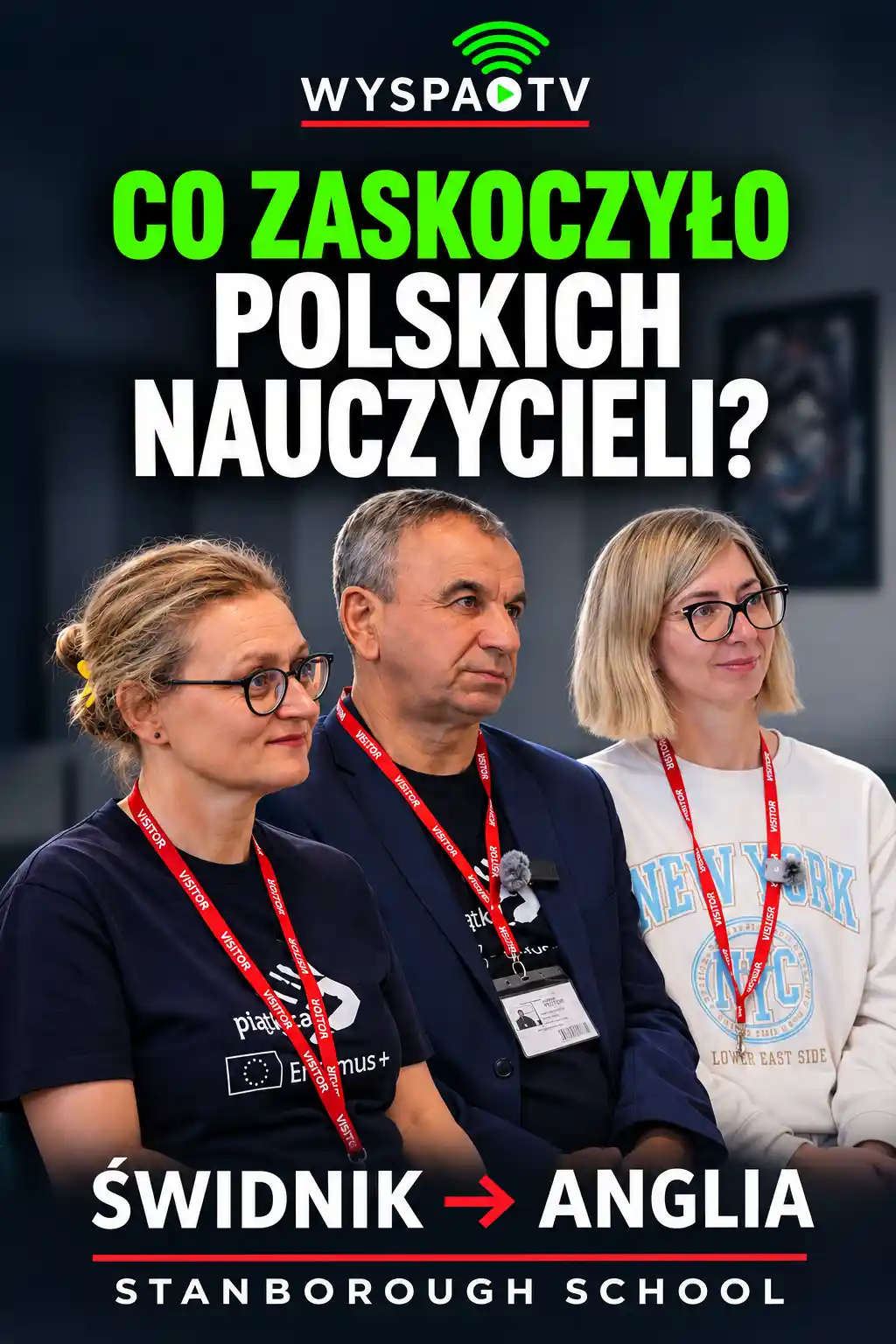
Everyday school life in England through the eyes of pupils and teachers from Świdnik visiting Stanborough School, UK

Author/Editor Maria Anna Furman
Just two days earlier, a pupil from Świdnik had insisted to her headteacher that she knew only two words in English. Then, during a maths lesson at Stanborough School in Welwyn Garden City, she put up her hand. In front of around thirty pupils, she solved a problem involving fractions and explained in English how she had arrived at her answer. Of all the moments the headteacher remembered from the visit, this one stood out. He knew how nervous she had been about speaking up in another language only days before.

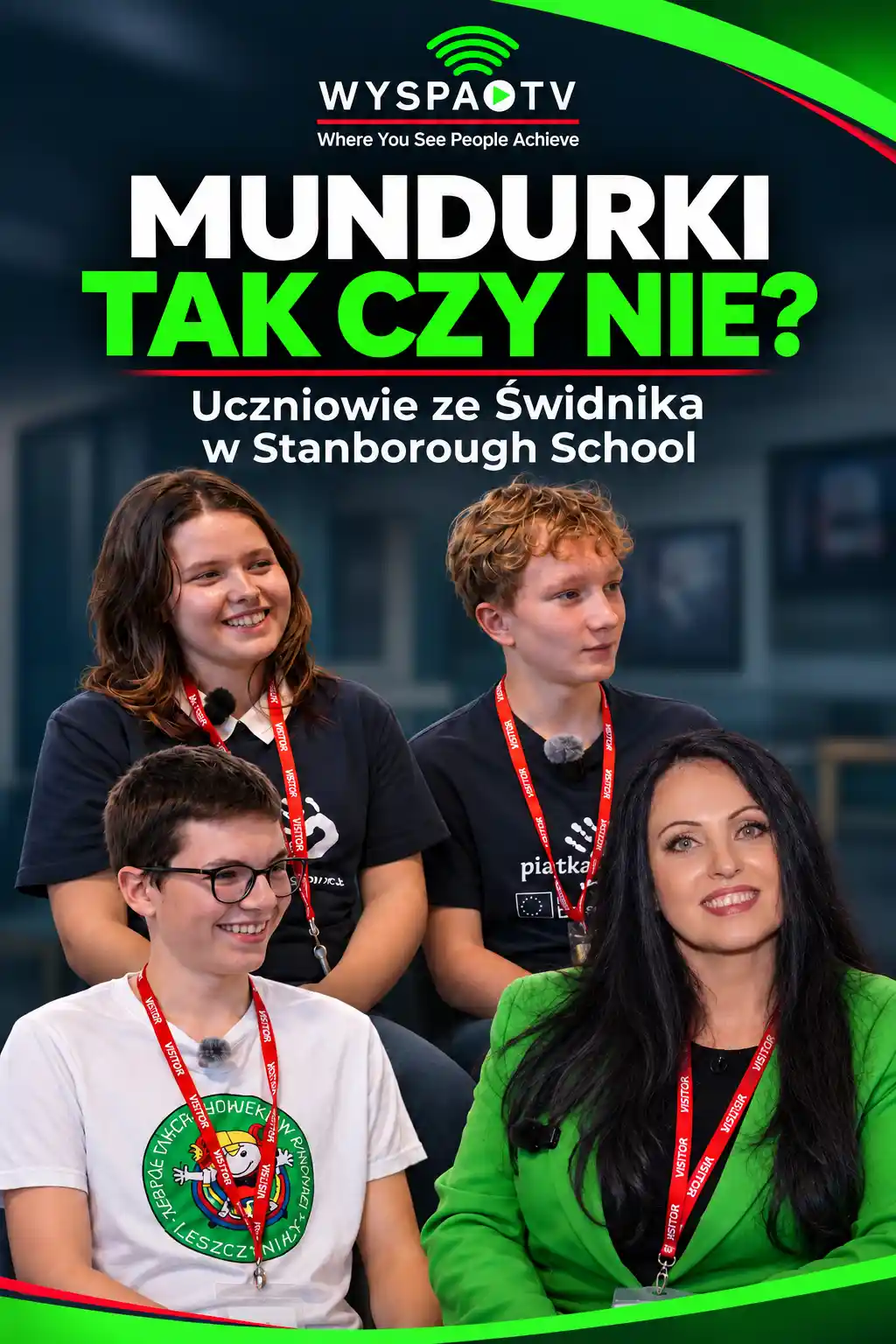
During the October visit to Stanborough School, Maria Anna Furman of Wyspa TV asked Iga, Tymoteusz and Bartek what they would remember about meeting the English pupils. Iga immediately thought of the presentation she had prepared for her hosts. She had enjoyed telling them about Poland and, in particular, as she put it, about “where I live and what I experience every day”. For part of the day, she had been getting to know the customs of an unfamiliar school. During her presentation, the roles were reversed. Her hosts could hear about Poland from someone their own age who had chosen for herself which parts of her everyday life to share with them.
Tymoteusz remembered a physics lesson in which the pupils learnt how to calculate the efficiency of a projector. He also took an interest in what happened at breaktime and how the school enforced its rules. He explained that pupils who came to school without their uniform or wore it incorrectly could have it noted on their record. Five such entries meant staying behind after school on a Friday. Tymoteusz could see a place for a similar approach in Poland. From what he had seen, there were times when a little more discipline at school would be welcome. Did pupils themselves want that, then? “Some of them certainly do,” he replied, leaving his classmates room to speak for themselves.
Bartek began by saying how much he liked the smart appearance of a school uniform. Then he mentioned something that can matter considerably more to a teenager. A new pair of trousers or the logo of an expensive brand can be enough to set classmates comparing what they wear. He had heard from friends that pupils were sometimes treated differently because their clothes cost less. He thought a uniform might ease that pressure. The English pupils he spoke to, meanwhile, valued the freedom to express something of themselves through what they put on in the morning.
A smaller detail caught Iga’s eye. She had been given a visitor’s badge, while the pupils were recognisable by the school logo on the front of their uniforms. Even on a short visit, she could tell who was a pupil there. Others could just as easily recognise her as a visitor. She liked the arrangement because it helped keep the school safe. And if it came to a vote on introducing school uniform, she would vote in favour.
The conversation changed pace when the interviewer asked for an example that had nothing to do with clothes. Tymoteusz began explaining why he was interested in grouping pupils according to how well they had grasped a subject. As he searched for a word, Bartek finished the thought for him. “Knowledge.” They had a familiar classroom situation in mind. Some pupils have already understood the topic, while others still need it explained. Bartek would be keen to try learning in sets, particularly in maths and English.
Maria Anna Furman asked the pupils to consider the idea from the perspective of someone placed in the group that needed the most support. How would they feel about being placed there? Might learning together give them the chance to get help from the classmate sitting beside them just when they needed it? For Bartek, much depended on the pace of the lesson. When a teacher moves at the pace of those who grasp the material most quickly, others can fall behind, no matter how hard they try. Iga added that, over time, those pupils might find themselves getting one low mark after another. Then there is the pupil who understood the task the first time. Going over it again takes up time they could have spent trying something more demanding. Bartek wanted teachers to have the time and scope to recognise what both pupils needed.
As the conversation drew to a close, Bartek thanked the headteacher and the mayor for the chance to get to know another culture. Tymoteusz made a point of thanking the teachers too. It was their work, he said, that had made the trip possible. Iga explained that anyone who wanted to go could apply, and that pupils’ attainment in English and maths had been taken into account when places were allocated. The two subjects they had just been discussing as they considered how schools judge what a pupil can do had also played a part in bringing them to Welwyn Garden City.
Author/Editor Maria Anna Furman
We invite you to subscribe if you appreciate our work and want to support us. By clicking the "Subscribe" button and contributing just £2 a month, you help us grow the Wyspa TV channel and gain access to exclusive premium content. Your support means a lot—thank you!
Meet the owners:
Maria Anna Furman, CEO of Golden Rule Ltd | Founder & Co-Creator of Wyspa TV | Creator of: Stars Night Awards | Leaders of Tomorrow | WINS Magazine
Przemysław Majdak, Co-Founder and Director of Content Production at Wyspa TV | Web Developer
Subscribe now – remove ads and explore premium content


Key Facts
Pupils and teachers from Świdnik visited Stanborough School in England on 15 and 16 October. This was a return visit following the English school's trip to Poland in May. Maria Anna Furman of Wyspa TV spoke about the partnership with headteacher Mrs M. John and Michał Siewniak, who helped establish contact with the Polish partners. The exchange offered opportunities to practise English, meet peers and share teaching experiences. According to Mrs John, meeting the visitors helped some pupils of Polish heritage become more confident.
What can a school exchange offer? Language, confidence and belonging
A school exchange can combine practical language learning with an opportunity to meet people and experience how another school works. During the Świdnik–Stanborough partnership, pupils used English to present their school, Lublin and the surrounding region. They had a clear subject and an audience interested in their experiences. This creates opportunities to practise speaking, ask questions and address a group.
The headteacher's account also highlights the role of cultural belonging. The Polish visit brought a country connected to some pupils' family backgrounds into the wider school community's attention. Mrs John noticed that some usually quiet pupils became more willing to participate. This is an observation about this particular visit, rather than a measurement of the exchange's lasting effects.
For teachers, the partnership offered an opportunity to look at school organisation and language teaching. Future cooperation could include further visits, sport and the arts, which were mentioned as possibilities during the interview. The partnership's value lies in the chance to build relationships through shared experiences and draw on them in everyday school life.
FAQ - frequently asked questions
What does the Świdnik–Stanborough School partnership involve?
The partnership involves reciprocal visits by pupils and teachers, opportunities to experience school life and the sharing of teaching experiences. Representatives of Stanborough School visited Poland in May, followed by the Świdnik group's visit to the English school in October.
When did the pupils from Świdnik visit Stanborough School?
The visit took place on 15 and 16 October. It was a return visit following the Stanborough School representatives' trip to Poland in May.
How did the school partnership begin?
Mrs M. John wanted Stanborough pupils to meet young people from other countries. Michał Siewniak helped establish contact with the Polish partners. According to the headteacher, it took eight years to turn the idea into reality.
How did the Polish pupils use English during the exchange?
The pupils from Świdnik gave presentations in English about their school, Lublin and the surrounding region. They used the language to share knowledge of places and experiences familiar to them.
What did the visit mean for pupils of Polish heritage at Stanborough?
Poland, a country connected to their family backgrounds, became a focus of interest for the school community. Mrs John noticed that some usually quiet pupils were more willing to talk to adults and volunteer to speak in front of others.
What did teachers gain from the school exchange?
Teachers had an opportunity to see how schools are organised and how languages are taught in both countries. The interview also explored kindness, caring for others and creating a school where pupils feel valued.
Why are direct meetings between pupils important?
In Michał Siewniak's view, spending time together allows young people to form their own impressions of a country and its people. Pupils can get to know their peers through personal experience rather than relying only on other people's accounts.
What are the ideas for future cooperation between the schools?
Mrs John wanted more pupils and teachers to have the opportunity to visit Poland. Michał Siewniak mentioned sport and the arts as possible areas for cooperation. The article does not give a confirmed date for the next visit.
Who produced the report on the Świdnik–Stanborough School exchange?
Maria Anna Furman of Wyspa TV prepared the report. She spoke with Stanborough headteacher Mrs M. John and Michał Siewniak about how the partnership began and what it means to both school communities.
- Details